May 2025
Earlier this year, I attended a Whole Building Life Cycle Assessment Workshop organized by the City of Vancouver and the RAIC, representing the AIBC.
The workshop explored Life Cycle Assessment (LCA) and embodied carbon through both theory and hands-on exercises — including the use of professional tools to calculate the carbon impact of real building projects.
But one of the moments I remember most began with something much simpler.
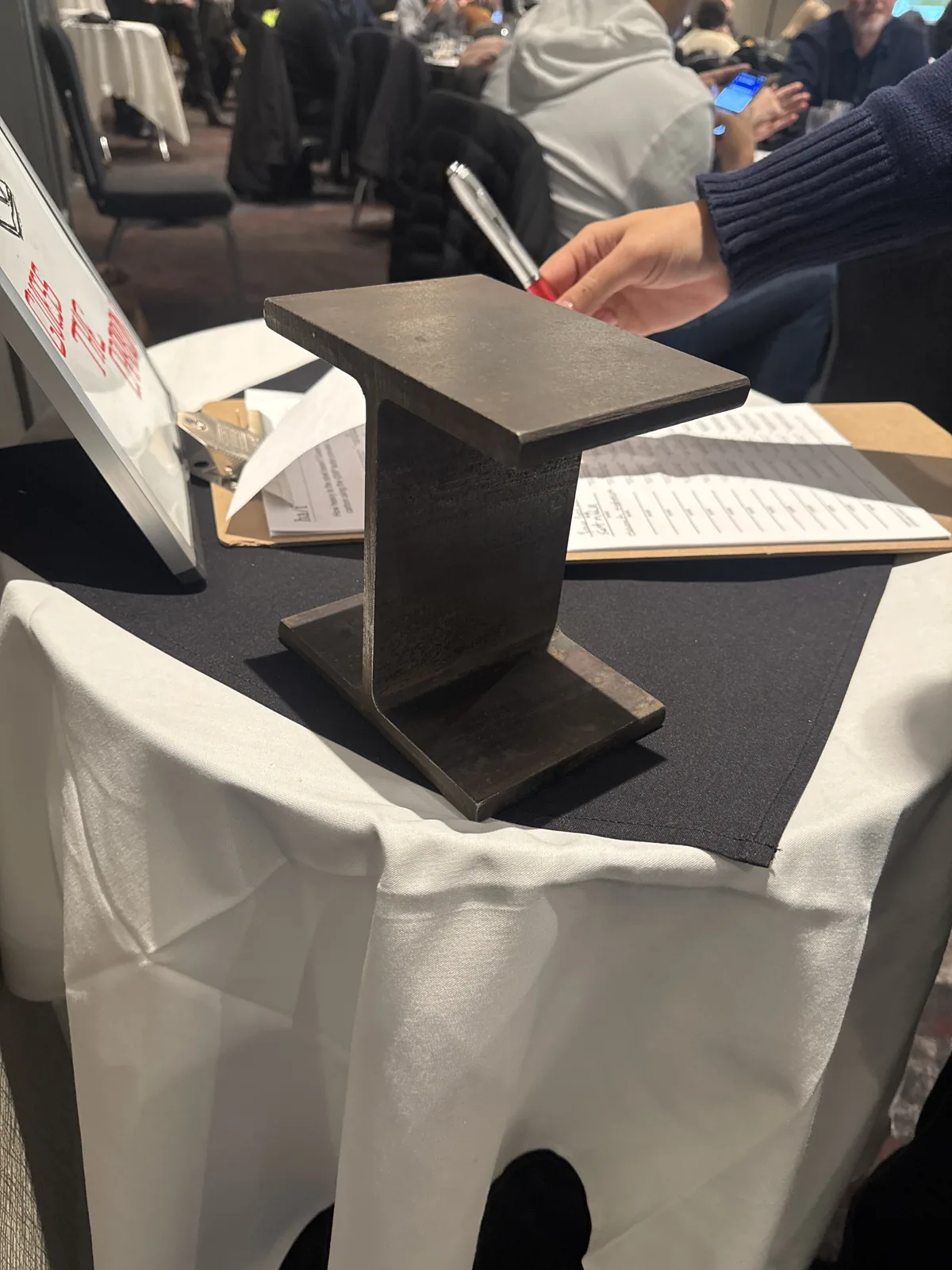
A piece of steel was sitting on a table.
The question was:
How much embodied carbon does it contain?
Making the Invisible Tangible
The exercise was straightforward in principle.
First, estimate the weight of the I-beam. Then, use the relevant Environmental Product Declaration (EPD) data to estimate its embodied carbon.
I had no intuitive sense of how much that piece of steel weighed.
So I measured it.
Using a phone app I often use on site, I approximated its dimensions. With those measurements, some help from AI to work through the weight calculation, and the EPD data provided, I arrived at an estimate.
It happened to be surprisingly close.
But that wasn’t the interesting part.
What stayed with me was how quickly something abstract had become tangible.
Carbon was no longer a number. It was sitting on the table.
It had weight.
It had dimensions.
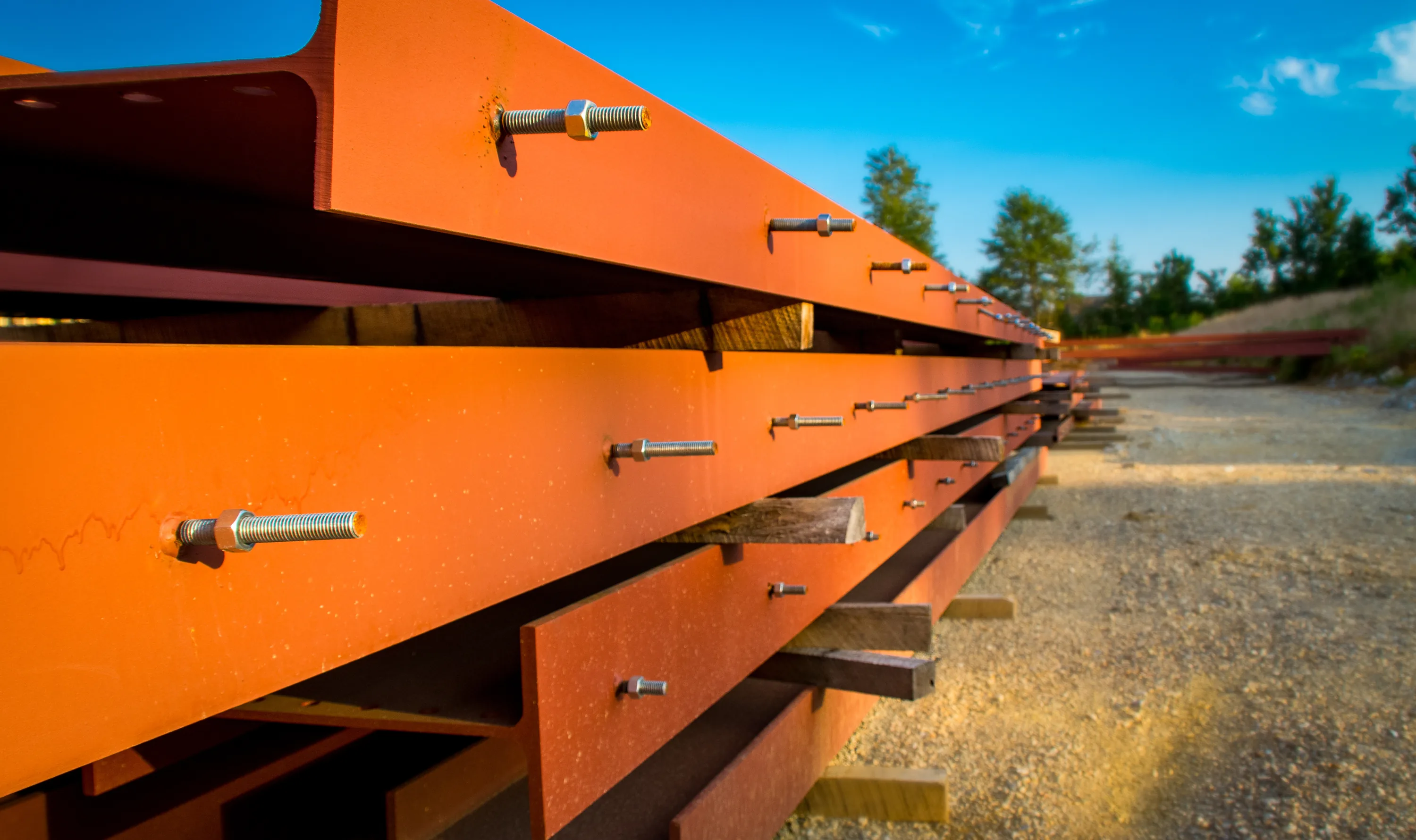
And before that piece of steel ever became a beam in a building, it already carried an environmental impact.
Looking at Materials Differently
Embodied carbon can easily feel abstract — another number in a spreadsheet, an LCA model, or a sustainability report.
But buildings are ultimately assembled from very physical things.
Steel. Concrete. Glass. Wood. Insulation.
As architects, we make decisions about these materials constantly. We think about performance, cost, availability, appearance, durability, and how they come together.
Increasingly, there is another layer to understand: the impact a material carries before the building is even occupied.
The workshop made that connection unusually immediate for me.
A line on a drawing eventually becomes a physical object. And that object comes with a history — of extraction, manufacturing, transportation, and energy.
Some of that history is visible.
Much of it isn’t.
New Tools, Familiar Instincts
There was also something interesting about the way I approached the exercise.
I didn’t know the answer, so I used the tools I had at hand: a phone to approximate the dimensions, an EPD for the carbon data, and AI to help work through the calculation.
The tools were relatively new.
The instinct was familiar:
observe, measure, understand, then make a judgment.
Perhaps that is one of the more useful ways to think about technology in architectural practice. Not as a substitute for judgment, but as another way to see more clearly what was previously difficult to see.
And in this case, what became visible was something that had been there all along.
The carbon inside a piece of steel.