August 2025
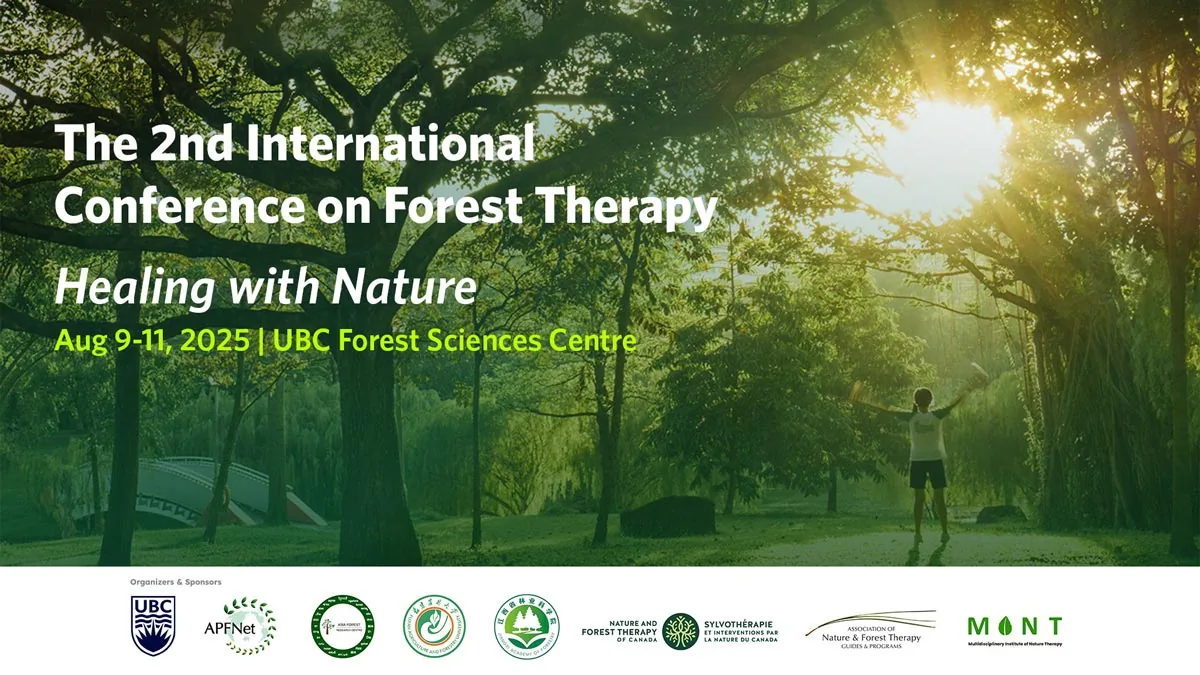
I was honoured to be invited as a panelist at UBC’s 2nd International Conference on Forest Therapy, joining the Healthy Living Forum: How Buildings, Materials & Spaces Shape Well-being.
There was something particularly meaningful about returning to UBC for this conversation. It was where I once came as a student — curious, learning, and still imagining where architecture might take me. This time, I returned as the founder of Moment Architecture, bringing with me some of the experiences that practice has given me along the way.
I shared the panel with architects Arno Matis and Mike Alivojvodic, UBC professor Dr. Haibo Feng. Different backgrounds and experiences made for a thoughtful conversation around a question that reaches beyond architecture itself: how can the environments we create contribute to healthier, more livable communities?
Bringing Practice into the Conversation
For my part of the discussion, I shared Bob and Michael’s Place, a project I led before founding Moment Architecture.
The project gave me an opportunity to talk about livability through something tangible — community integration, sustainable design, and the role of shared and public spaces in creating places that support everyday life.
I have always believed that completed projects have a life beyond the drawings and buildings themselves. They become accumulated experience: things that worked, things that surprised us, and lessons that quietly inform the next project.
Bringing Bob and Michael’s Place into an academic conversation reminded me of that. Practice has something to contribute to research and dialogue, just as research can give practice new ways of seeing familiar questions.
Listening Beyond Architecture
The conference also gave me the chance to listen.
Dr. Kathy Wolf from the University of Washington spoke about the relationship between nature, people, and the public realm, while Dr. Justin Morgenroth from the University of Canterbury discussed urban forests and well-being. Their research opened up different ways of thinking about how cities and nature can coexist — and how the environments around us affect everyday life.
That exchange was one of the parts I valued most.
Architecture can easily become inward-looking. We spend so much time thinking about buildings, approvals, materials, construction, and all the immediate realities of practice.
Stepping into a conversation with researchers and practitioners from other disciplines is a useful reminder to look outward again.
Sometimes a different discipline asks a familiar question in a completely different way.
Returning with New Questions
Being back at UBC also felt a little full circle.
Years ago, I was there to learn. This time, I had something from practice to share — while still finding myself learning from the people around me.
Perhaps that balance is important.
To practice is to accumulate experience.
To share is to make that experience useful to others.
And to keep learning is to make sure experience never becomes certainty.
I came away from the conference with new connections, new perspectives, and, perhaps most importantly, new questions to carry back into practice.
Because architecture is never only about buildings.
It is about people, community, nature, and the everyday experiences that happen between them.
Where Space Becomes Moments.